
Minneapolis-Moline History & Timeline
Minneapolis-Moline was one of American farming’s most distinctive tractor makers — the Prairie-Gold machines built in Hopkins and Minneapolis, Minnesota and Moline, Illinois. This page traces the company from its three predecessor firms through the 1929 merger to the end of the marque, with a year-by-year timeline of the tractors. Company milestones are cited to the source below; every model links to its own page, where production years are sourced individually.
The three companies behind Minneapolis-Moline
Minneapolis-Moline was formed in 1929 by the merger of three companies: Minneapolis Steel & Machinery, maker of the Twin City tractors; the Minneapolis Threshing Machine Company, which built “Minneapolis” tractors; and the Moline Implement Company (formerly Moline Plow), maker of the Moline–Universal. See our predecessors overview for how the three lines came together.
Under the Minneapolis-Moline name the company built the R, Z, U and G series, pioneered the closed-cab UDLX “Comfortractor” in 1938 (in Prairie-Gold paint), and went on to the Star and Jet Star tractors, the M series and the Big-G six-cylinder line. In 1960 it reorganized as Motec Industries, was acquired by the White Motor Company in 1963, and the Minneapolis-Moline brand name was dropped in 1974. (See also the specialty machines and model-suffix guide.)
The company in pictures
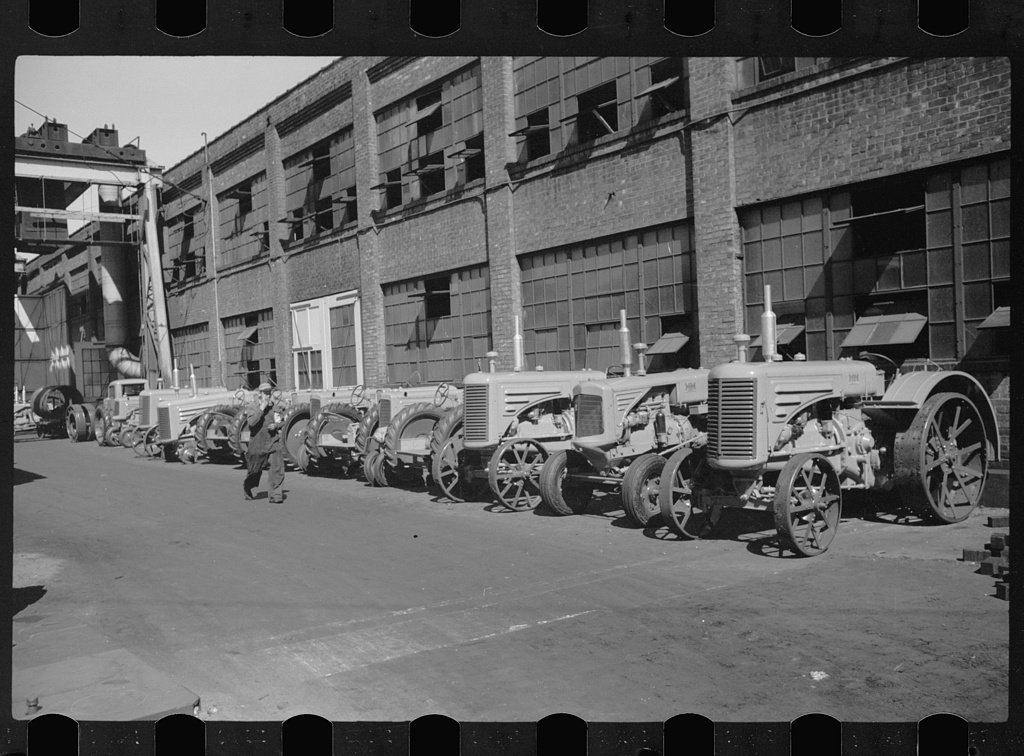
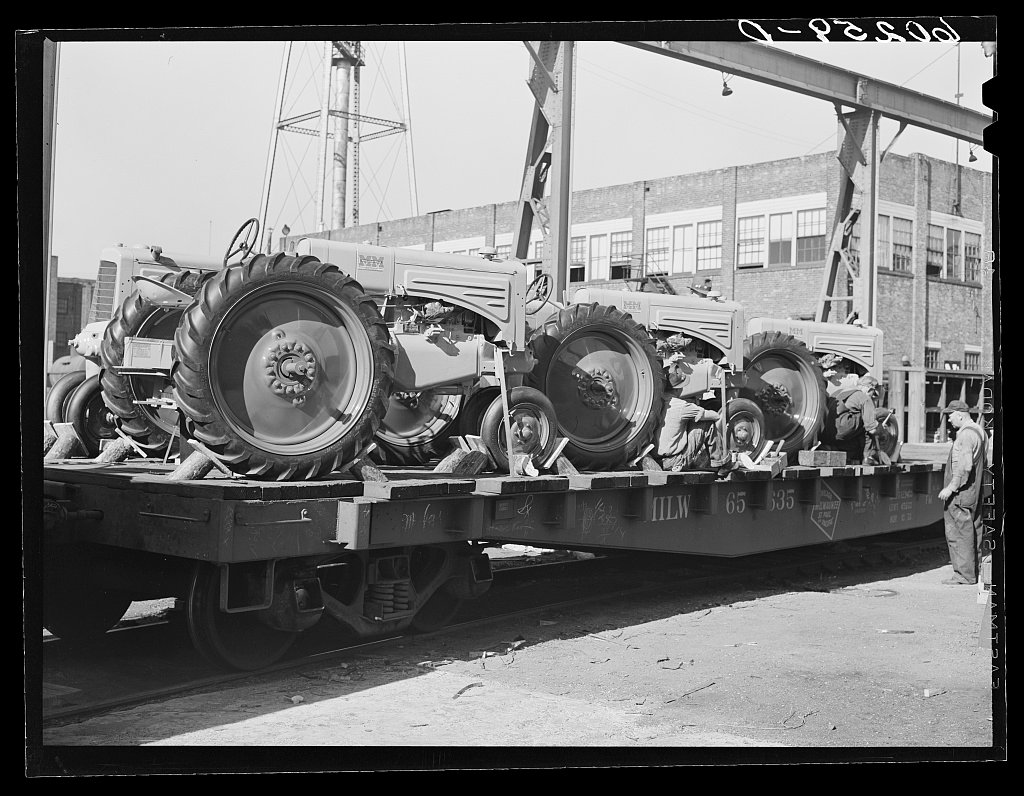
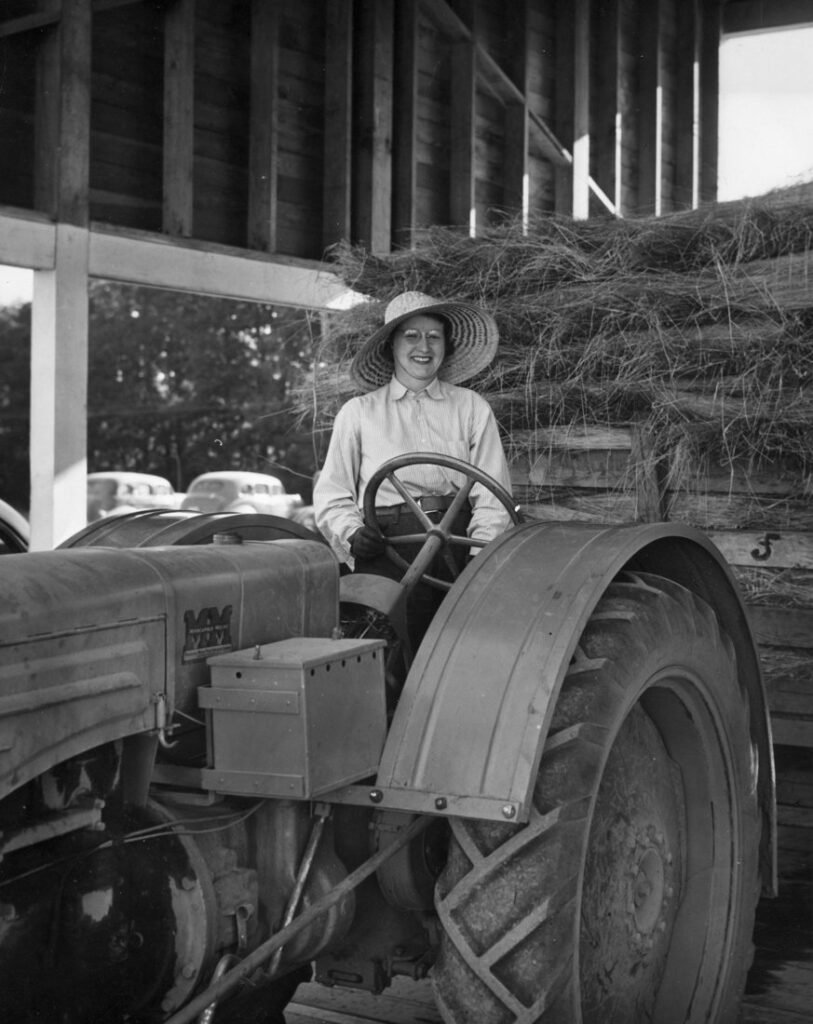
.jpg)
Timeline
The predecessor era (through 1928)
- 1887 — The Minneapolis Threshing Machine Company is founded; it would enter the gasoline-tractor market in 1910.
- 1902 — Minneapolis Steel & Machinery Company, maker of the Twin City tractors, is active in this era.
- 1910 — Twin City 40-65.
- 1913 — Twin City 15-30, Twin City 25-45.
- 1916 — Twin City 60-90.
- 1917 — The Moline Plow Company’s Moline–Universal Model D — an early motor-cultivator and among the first tractors with electric starter and lights — reaches the market. Models introduced: Moline Universal Model D, Twin City 16-30.
- 1918 — Minneapolis (MTM) 17-30, Minneapolis (MTM) 35-70 / 40-80, Twin City 12-20.
- 1920 — Minneapolis All-Purpose 12-25, Twin City 20-35.
- 1926 — Twin City 17-28, Twin City 21-32, Twin City 27-44.
- 1928 — Minneapolis (MTM) 27-42, Minneapolis (MTM) 39-57.
The Minneapolis-Moline era (1929–1974)
- 1929 — Minneapolis-Moline is formed by the merger of three companies: Minneapolis Steel & Machinery (Twin City), the Minneapolis Threshing Machine Company (“Minneapolis”), and the Moline Implement Company (formerly Moline Plow, maker of the Moline–Universal). Models introduced: Twin City 21-32 FT / FTA, Twin City KT (Kombination Tractor) / KTA.
- 1930 — Twin City MT / MTA.
- 1934 — JT.
- 1936 — JT-O (Orchard), JTS, ZTI, ZTU.
- 1937 — YT, ZTS.
- 1938 — The UDLX “Comfortractor” pioneers the closed-cab farm tractor, in bright Prairie-Gold paint. Models introduced: GT, GTI, UDLX (Comfortractor / U Deluxe), UTU.
- 1939 — RTN, RTS, RTU.
- 1940 — RTI / RTI-M, UTI / UTI-M.
- 1942 — GTA.
- 1947 — GTB, RTE.
- 1949 — ZA / ZAS / ZASI.
- 1950 — BF.
- 1951 — The Uni-Tractor (Uni-System) self-propelled power unit is introduced in the early 1950s. Models introduced: GTC, Uni-Tractor (Uni-System), V.
- 1953 — The ZB arrives, refining the long-running Z line. Models introduced: BG, UB, ZB.
- 1955 — GB.
- 1956 — 335, 445.
- 1957 — 5 Star.
- 1958 — 2 Star.
- 1959 — 4 Star, Big Mo 400 / 500 / 600, G-VI, Jet Star.
- 1960 — Minneapolis-Moline reorganizes as Motec Industries; the M series begins. Models introduced: M-5, MoTrac.
- 1962 — G704 / G705 / G706 / G707 / G708, M-504, Town & Country MoCraft 100 / 107.
- 1963 — Motec is acquired by the White Motor Company. Models introduced: Jet Star 2, M-602, M-604.
- 1964 — Jet Star 3 / Jet Star 3 Super, M-670 / M-670 Super, Town & Country 108 / 110 / 112 / 114, U-302.
- 1965 — G1000 / G1000 Vista.
- 1967 — G900 / G950 / G1050 / G1350.
- 1969 — A4T-1400.
- 1970 — A4T-1600.
- 1971 — G350 / G450 / G550 / G750 / G850 / G940 / G955.
- 1972 — G1355.
- 1974 — White drops the Minneapolis-Moline brand name, ending the marque.
Company-history milestones are drawn from the cited source; tractor production years come from each model’s own individually-sourced page. Approximate or still-being-verified dates are noted on the model page.